

TL;DR (10,000 users, 500,000 items, ~4M edges).Dataset hash
- HelixDB crushes graph workloads (5-20x faster) and is your best bet for production graph workloads (GraphRAG, recommendations, social graphs)
- Neo4j 5-20x slower than HelixDB
- Postgres is 10-80x slower
ffed7c34a46dc90e· Conducted November 2025 · Raw data in repo
How to Read This
Test Environment
Hardware: AWS c6g.2xlarge (eu-west-2) · 8 vCPUs (ARM Neoverse-N1) · 16 GB RAM · 500 GB gp3 EBS Software: Ubuntu 24.04 LTS · HelixDB v2.1.0 · Neo4j 2025.09.0 (G1GC) · PostgreSQL 16.10 Benchmark: 2s warmup · 5s measurement window · FixedConcurrency (100/200/400/800) + FixedQPS (400/800/1600) Dataset: 10k users across 25 countries · 500k items across 1k categories · ~4M edges (~400/user)Workloads Tested
Results Summary
Detailed Results
1 · PointGet — Simple ID Lookup
Retrieve single item by ID (product detail, user profile). Winner: HelixDB — 12x Postgres, 16x Neo4j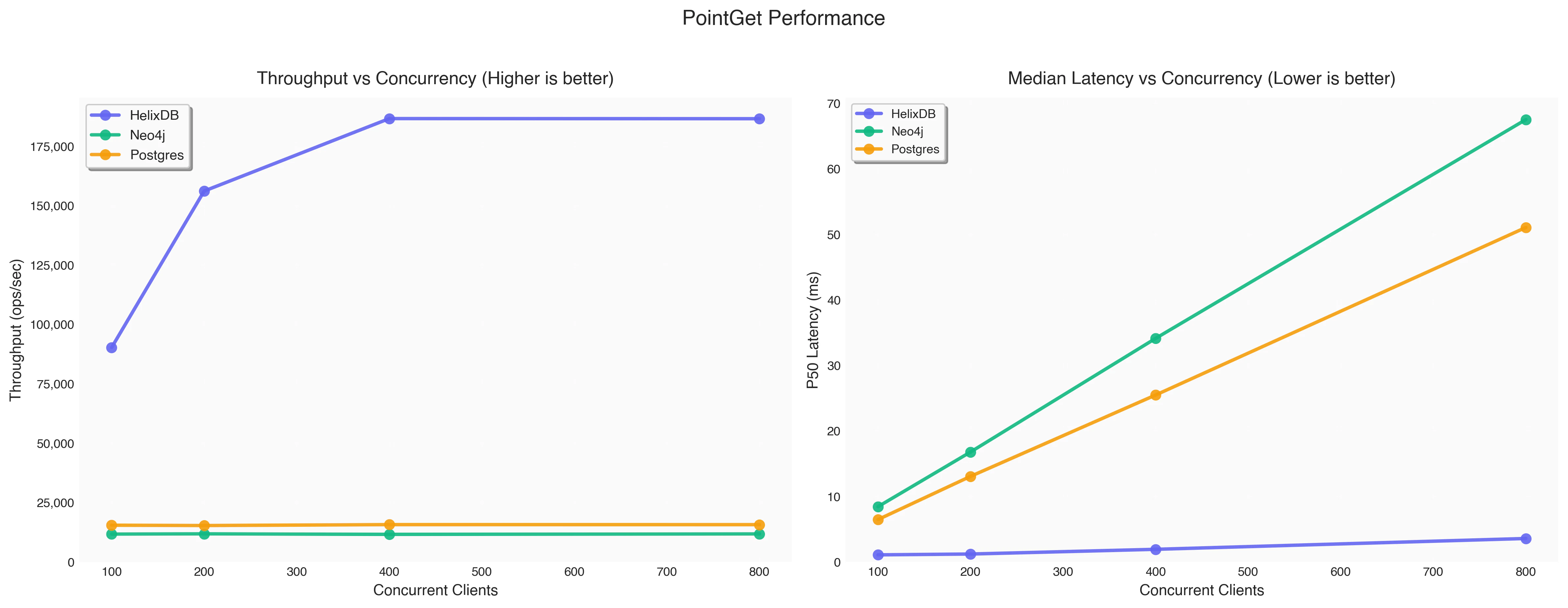
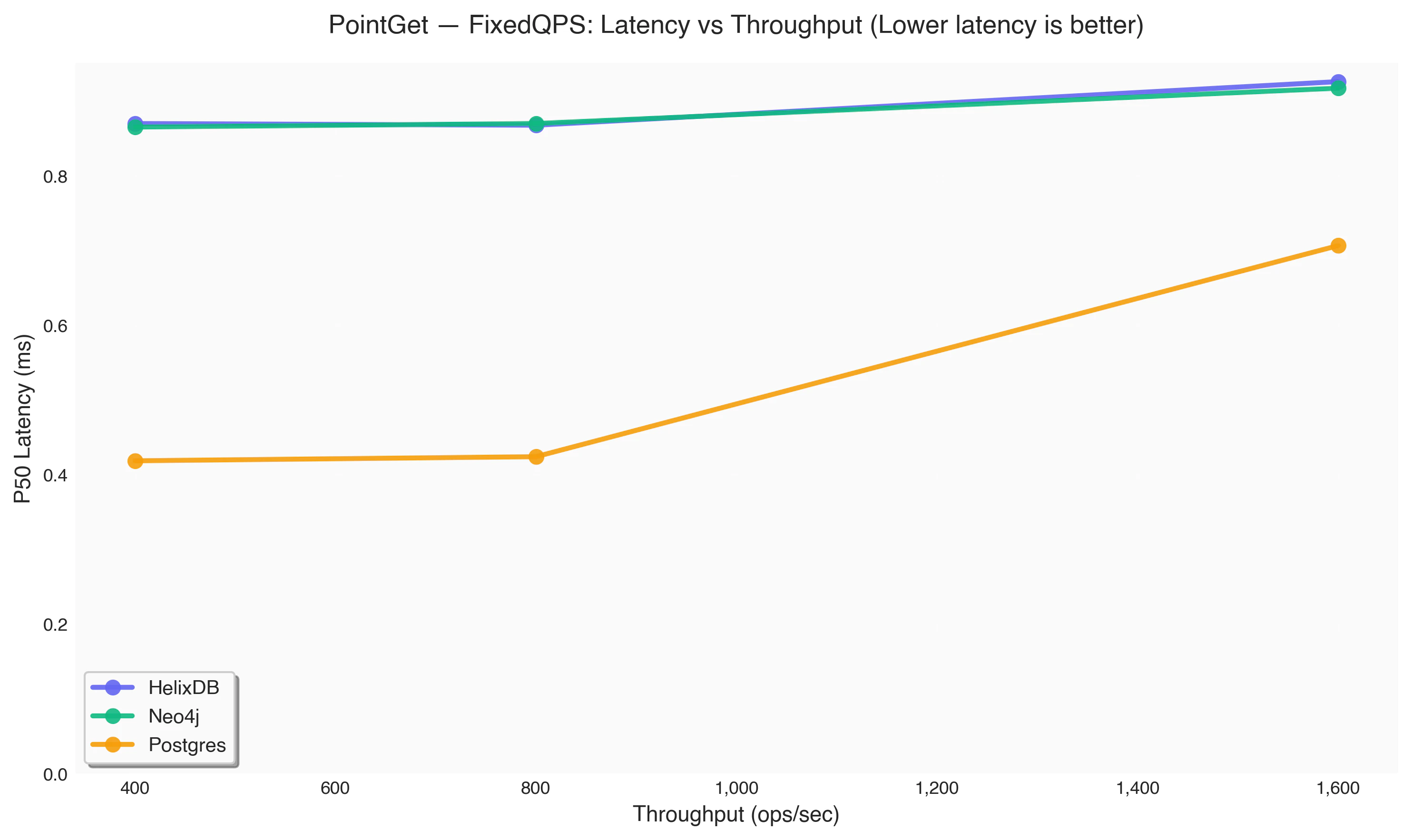
FixedConcurrency Results
FixedQPS Results
2 · OneHop — Graph Traversal
Fetch all items a user interacted with (~400 edges/user). Winner: HelixDB — 5.9x Neo4j, 13x Postgres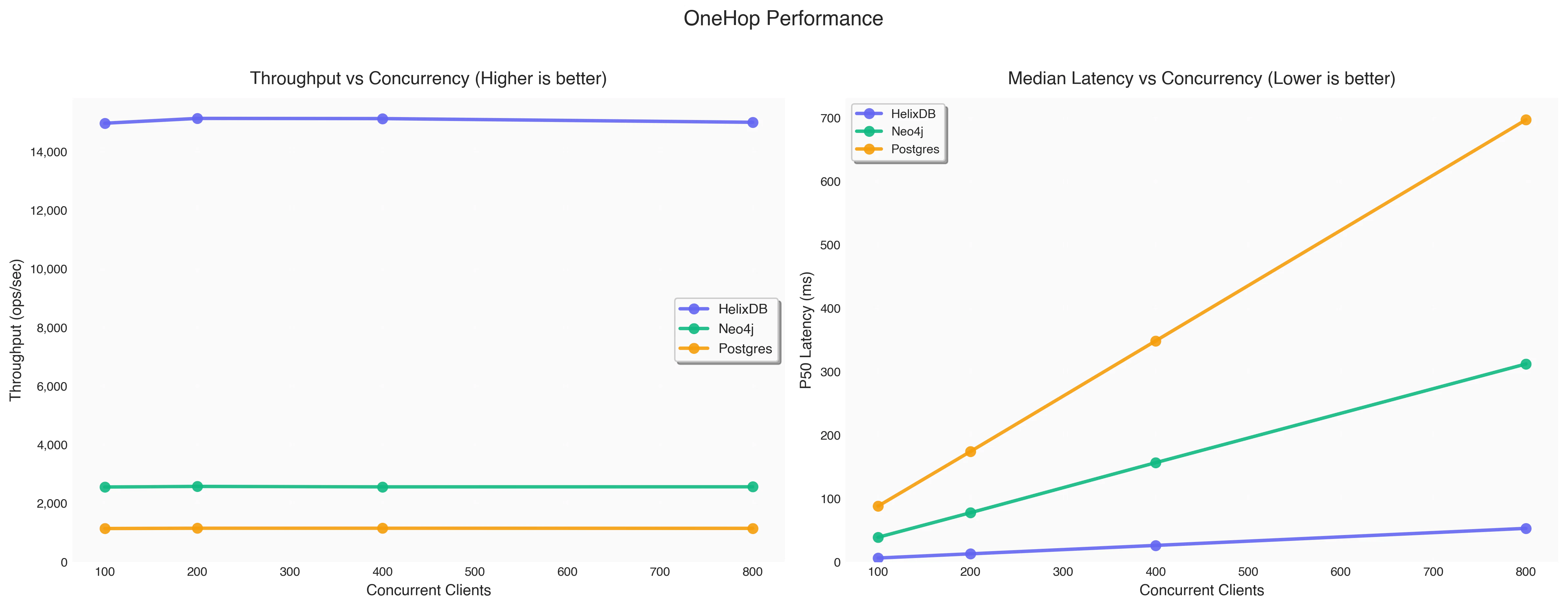
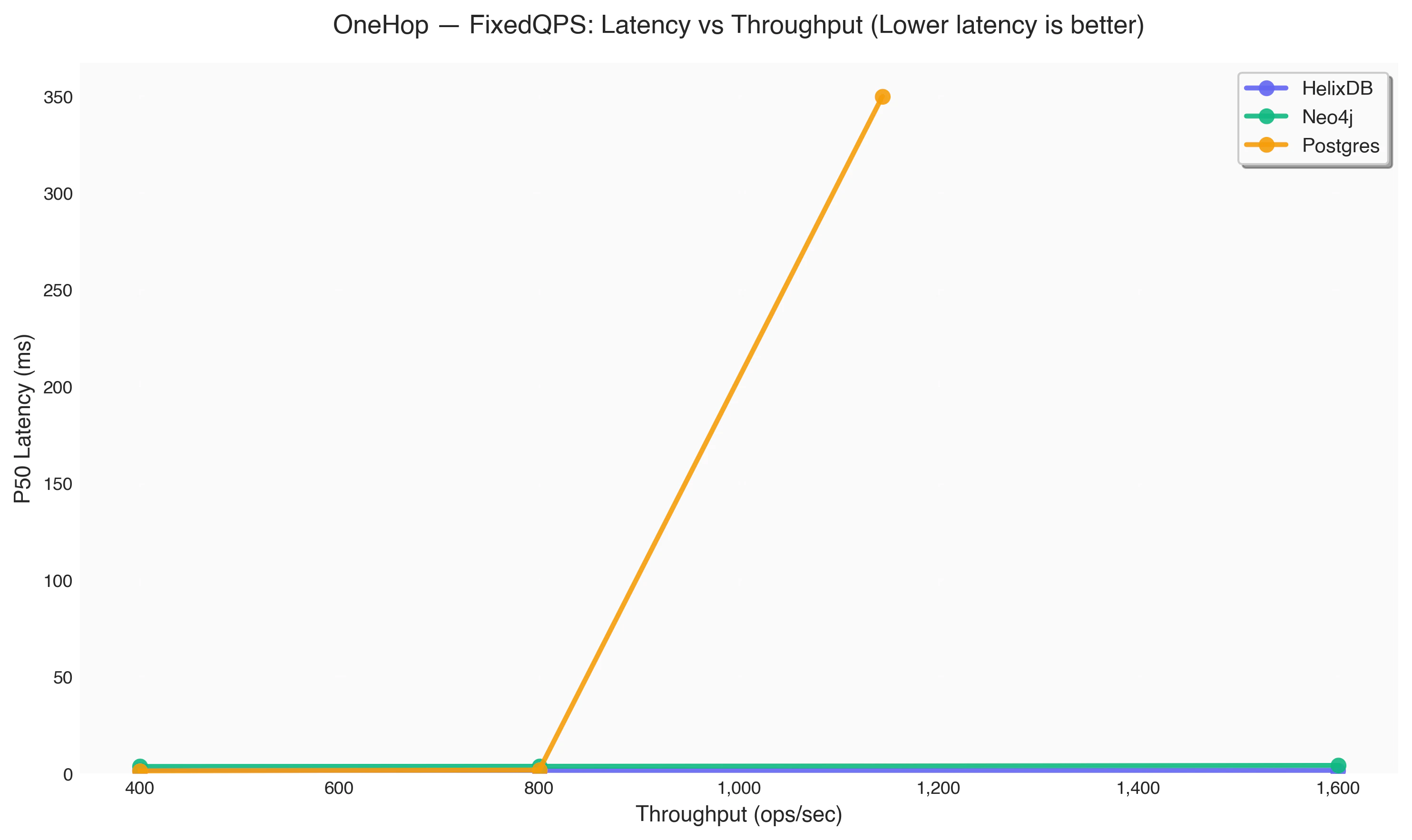
FixedConcurrency Results
FixedQPS Results
3 · OneHopFilter — Filtered Traversal
Find items a user interacted with in a specific category. Winner: HelixDB — 4.2x Neo4j, 20x Postgres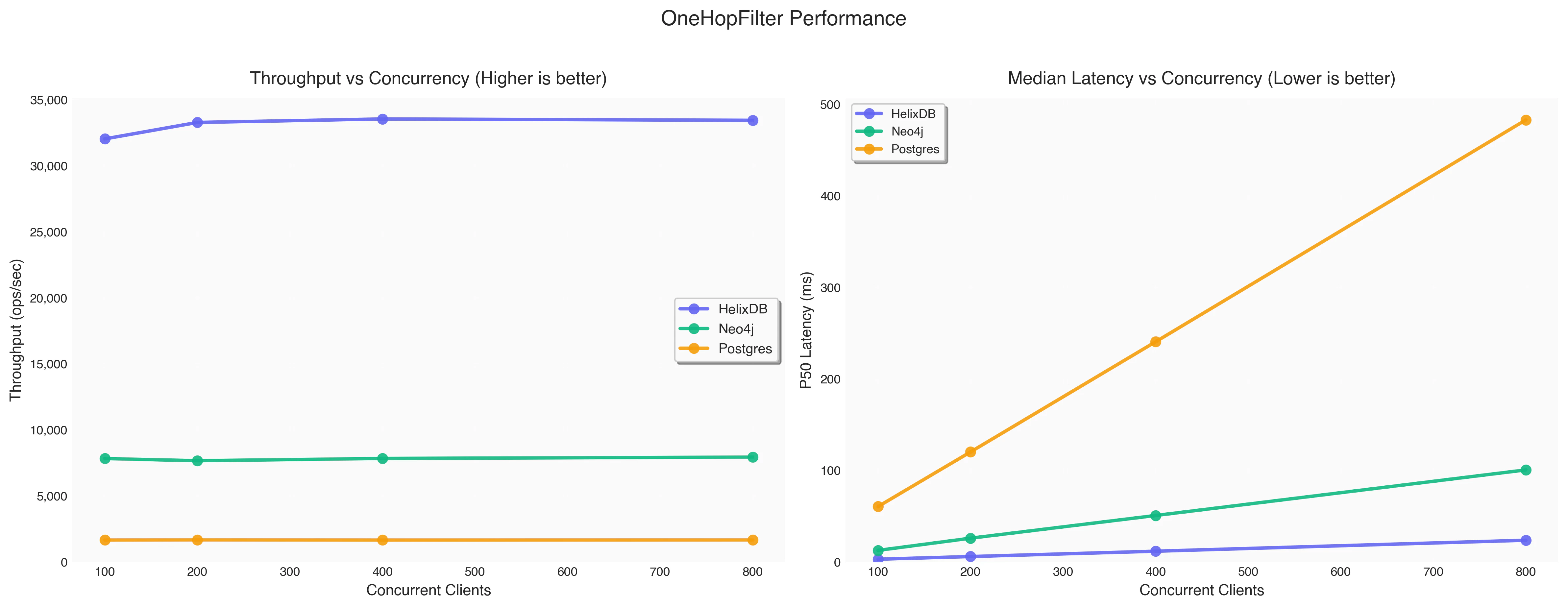
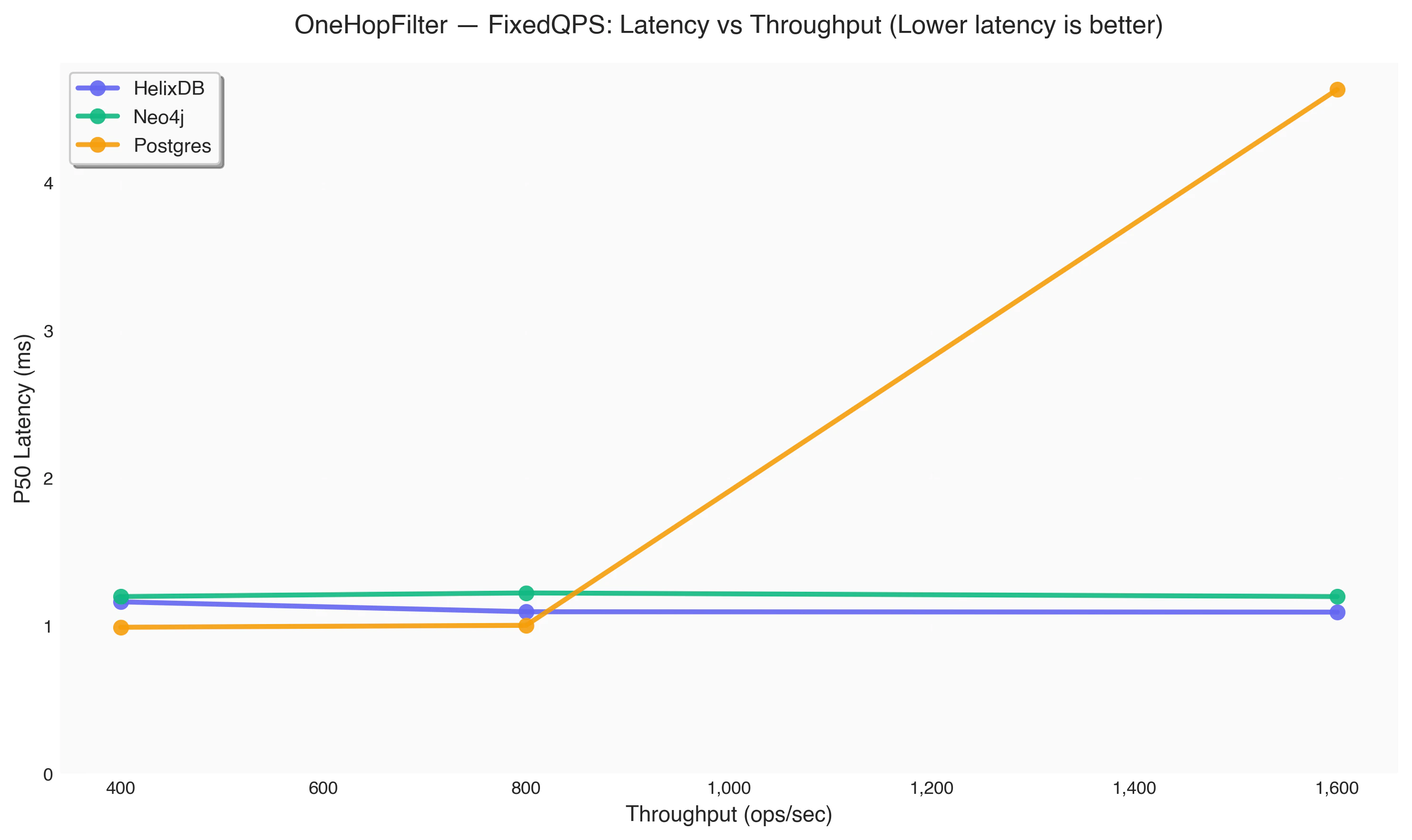
FixedConcurrency Results
FixedQPS Results
Performance Highlights
Limitations & Reproducibility
What we didn’t test:- Cold-start latency
- Insertion times
- Memory footprint during ingestion
- Operational complexity
- Dataset hash:
ffed7c34a46dc90e - Raw JSON results, configs, and benchmark driver in repo
- Tests: November 2025, AWS c6g.2xlarge (eu-west-2)
The Bottom Line
For graph workloads (GraphRAG, Agentic systems, recommendations, social graphs): -> Use HelixDB. The 5-20x graph advantage dominates in real-world scenarios where traversals are frequent.Benchmark data + scripts: github.com/helixdb/graph-vector-bench